
An LED makeup mirror sample is not only a visual reference. It should become a testable approval standard for lighting, power, structure, branding and packaging before bulk production starts. This checklist helps buyers document those decisions without assuming that one specification applies to every LED mirror model.
For available product routes and project-level customization, see our custom LED makeup mirror manufacturing page. The checklist below focuses only on what the buyer and supplier should approve on the selected sample.
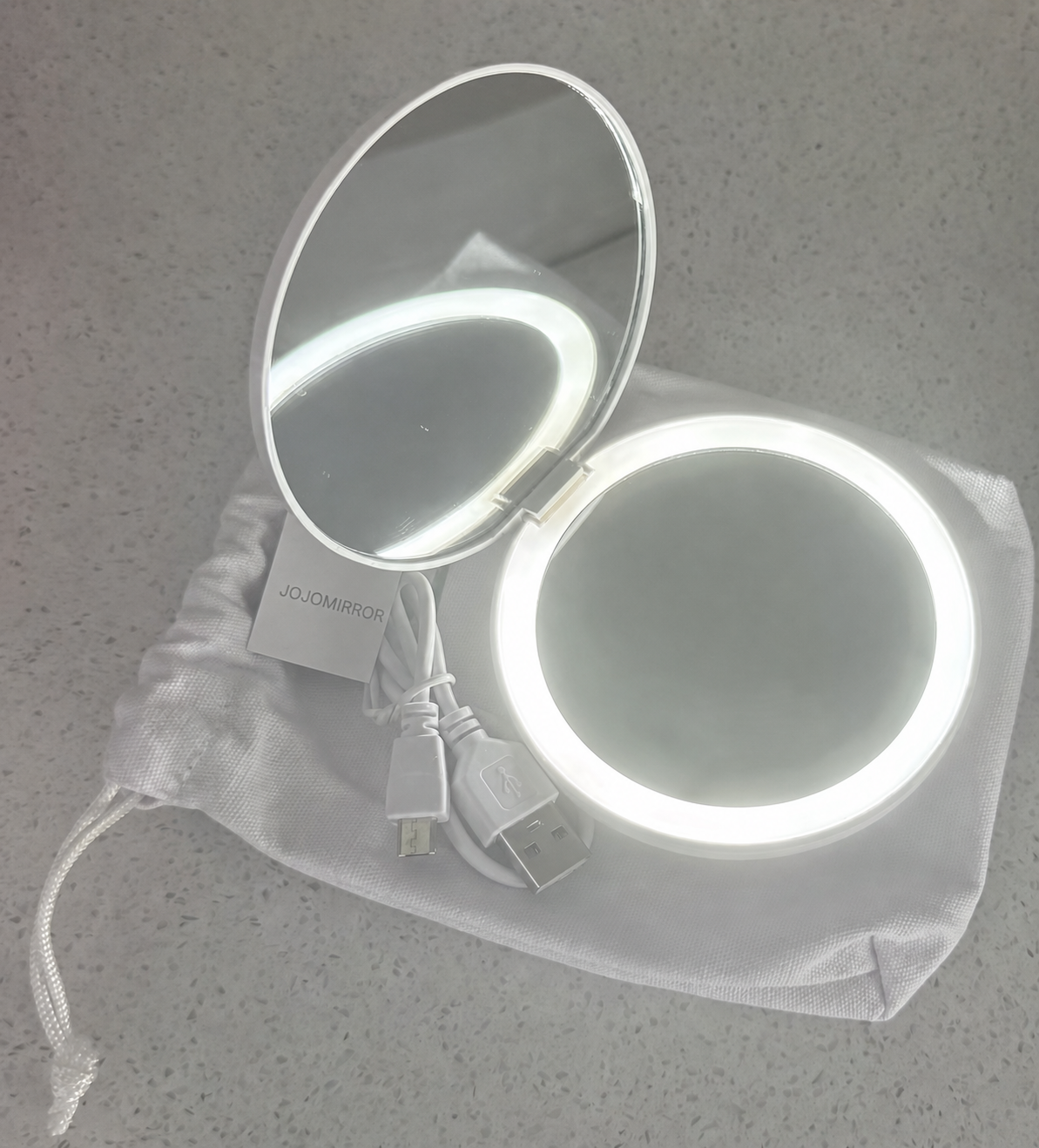
1. Freeze the Buyer Brief Before Reviewing the Sample
Before the supplier prepares or revises a sample, confirm the intended market, program use, target quantity, size limit, selected product structure, required functions, logo artwork and packaging direction. If any of these inputs remain open, record them as pending instead of treating the sample as fully approved.
- Market and use: retail, beauty launch, GWP, travel set, event or corporate gift
- Maximum product and packed dimensions
- Required lighting and control behavior
- Selected power or charging arrangement
- Logo file, color reference and placement
- Packaging components and required instructions
2. Mirror and Optical Check
Inspect the mirror under normal viewing conditions and at the intended use distance. Check for scratches, chips, breakage, contamination and visible distortion. If the design includes magnification, approve the exact side or insert, the viewing distance and the size of the magnified area. Do not approve a magnification number without checking how it performs in the actual product dimensions.
3. LED, Controls and Light Consistency
- Confirm that all LED sections illuminate normally.
- Check each approved light mode and the order in which modes change.
- Test dimming across the usable range when dimming is included.
- Confirm that the touch switch responds consistently.
- Compare brightness and light appearance across more than one approved sample when available.
- Record any acceptable tolerance or visual limit that must be followed in production.
Descriptions such as “bright enough” or “natural light” are difficult to reproduce. The approval record should identify the selected configuration and, where necessary, include photos or video captured under comparable conditions.
4. Power, Charging and Runtime Target
Test the approved power method with the cable, battery arrangement or plug configuration intended for the order. Confirm charging response, indicator behavior and normal operation after charging. Runtime should be tested against the approved battery and lighting configuration; it is a project-specific target rather than a universal claim for all LED mirror models.
Battery Documentation and Transport
For a rechargeable model, record the exact cell or battery used in the approved sample. Before freight booking, ask the forwarder which transport evidence, packing and marking apply to that battery, destination, carrier and air or sea route. Confirm the applicable UN 38.3 (often written UN38.3) test summary and any safety data sheet (SDS/MSDS) or carrier-requested documents against the actual cell; do not assume that paperwork for one battery or model covers another.
5. Structure and Assembly
- Open, close, fold or adjust the mirror through the intended movement.
- Check hinge, stand and joint stability.
- Inspect the shell and edges for rough areas or burrs.
- Confirm that assembled parts are secure and aligned.
- Check whether the unit remains stable in its intended operating position.
6. Logo, Color and Surface Approval
Approve the logo against a specified artwork file and color reference. Record the print size, position, orientation and acceptable color result on the actual surface. Also inspect the shell for scratches, dirt, coating defects and inconsistent finish. A logo shown only on a digital mockup is not a substitute for approval on the physical sample.
7. Packaging and Transport Protection
Review the complete packed unit. Confirm that the mirror surface, controls, cable and accessories are protected and that the product cannot move excessively inside the pack. Check the pouch, tray, box, instructions, labels and shipping-carton arrangement that are included in the approved scope. Transport testing should be defined according to the final packaging and route rather than assumed from an unpacked sample.
8. Turn Approval into a Production Record
The final approval package should include the dated specification, approved artwork, color reference, packaging layout, sample photos or video, test requirements and a clear list of open issues. Both sides should identify which physical sample or revision is the production reference. Any change after approval should be recorded rather than agreed only in chat messages.
Our 5,000-unit Iceland LED compact mirror case shows why physical logo-color approval, light-mode checks, charge retention and flicker inspection were recorded for one completed order.
What to Send with an LED Mirror RFQ
Send the market, use, target quantity, desired structure, size limit, lighting and power requirements, logo artwork, packaging direction and target schedule. JoJoMirror can then confirm which details can use an existing design and which need project-specific development or sampling.