
A tabletop mirror can be a stable countertop product, a compact folding accessory or an illuminated vanity item. The right route depends less on how the product looks in a reference image and more on where it will be used, how much table space is available and which functions the buyer is prepared to approve.
For available structures and custom-development options, see our custom tabletop vanity mirror manufacturing page. This guide focuses only on deciding whether a non-lighted or LED tabletop format fits the program.
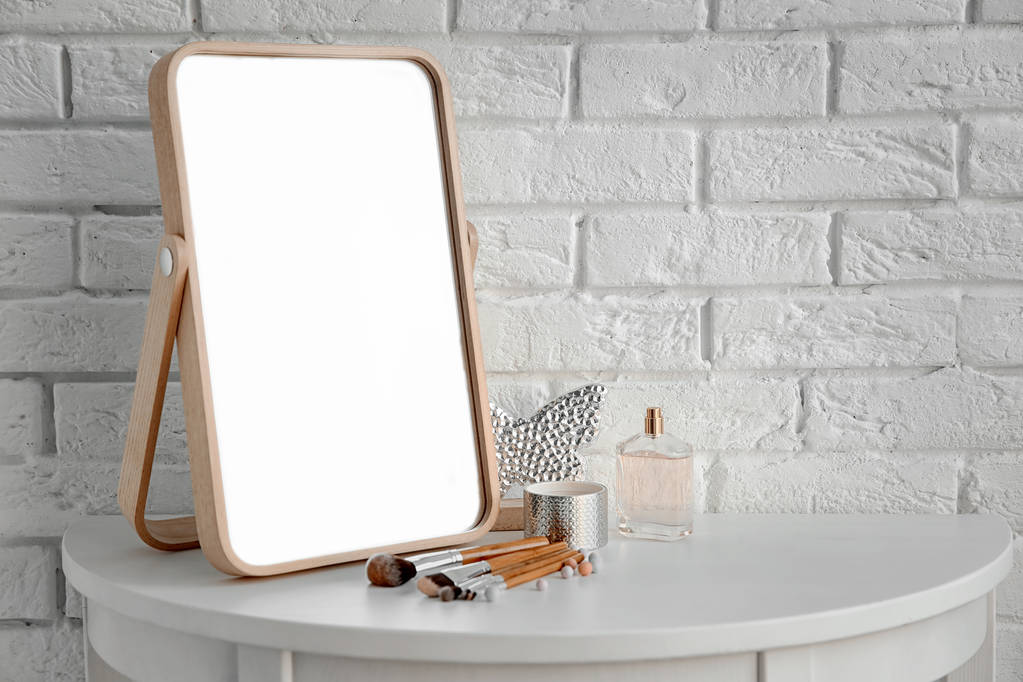
When a Non-Lighted Tabletop Mirror Is the Better Route
A non-lighted mirror keeps the approval task centered on the stand, rotation, mirror and finish. It can be a better fit when the program needs a simpler product, has limited space for instructions or accessories, or does not want an electrical component in the retail pack.
- The buyer wants a stable fixed-base or rotating vanity format.
- The mirror will be used where ambient lighting is already available.
- The pack needs to avoid cables, power instructions or electrical checks.
- Finish, frame shape and magnification are more important than lighting functions.
When an LED Tabletop Mirror Adds Buyer Value
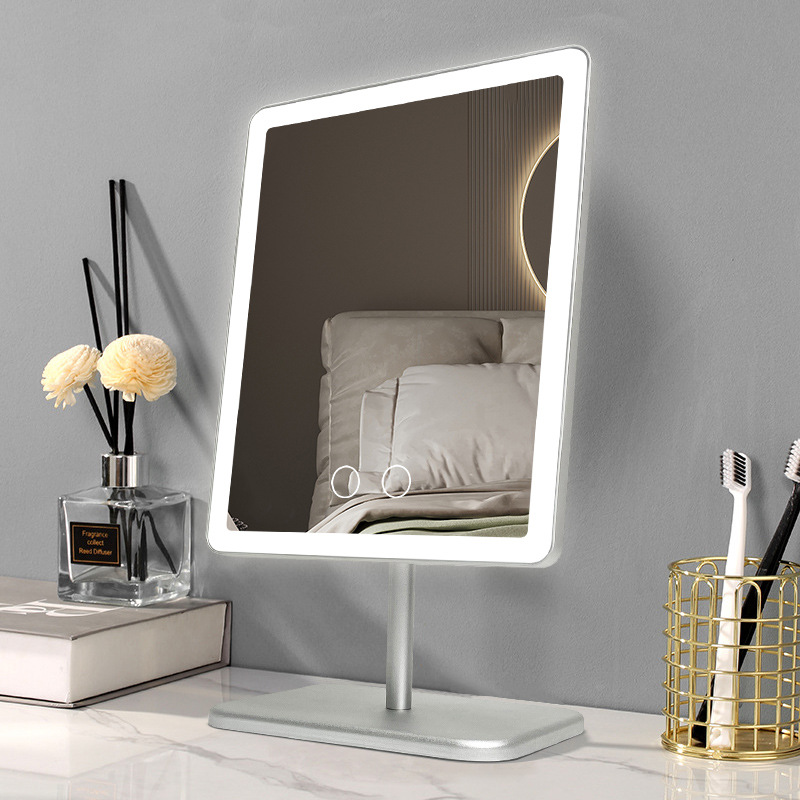
An LED route makes sense when controlled illumination is part of the product promise. The buyer should be ready to approve the warm, daylight and cool modes, mirror touch control, power connection and complete instructions on the physical sample.
- The retail concept specifically calls for illuminated makeup application.
- The pack can accommodate the approved USB cable or plug-in arrangement.
- The buyer can review light switching and touch response as functional requirements.
- The project schedule includes time to test the complete electrical configuration before bulk production.
This section only helps decide whether lighting belongs in the tabletop program. If illumination is a required product function, review the available electrical routes, approval responsibilities and documentation boundaries on our custom LED makeup mirror manufacturing page.
When a Tabletop Format May Not Be the Right Choice
- The available counter space is very small. A compact or handheld mirror may fit the program better than a stable base.
- The packed dimensions are tightly limited. A base, stand and protective packaging can require more volume than a folding compact mirror.
- The viewing position is not defined. Height, angle and rotation cannot be approved reliably without knowing how the mirror will be used.
- High magnification is selected from a number alone. The usable mirror size and viewing distance must be reviewed together.
- An LED concept has no functional approval plan. Lighting should not be added when nobody owns the decisions for modes, touch control, power and instructions.
- A mains-powered model must ship to several markets before plug, voltage and electrical-document requirements can be confirmed. These requirements are approved per power configuration and destination market, not assumed across one tabletop mirror program.
Five Decisions to Make Before Requesting a Sample
- Where will the mirror stand, and how much base space is available?
- Should the structure be fixed, folding, rotating, double-sided, detachable or storage-based?
- Is a non-lighted product sufficient, or does the program require approved LED functions?
- Which viewing position and magnification need to work in the real structure?
- What unit pack and transport protection must fit the retail channel?
Once these decisions are clear, use the tabletop mirror sample approval checklist to turn the selected route into a production record.