
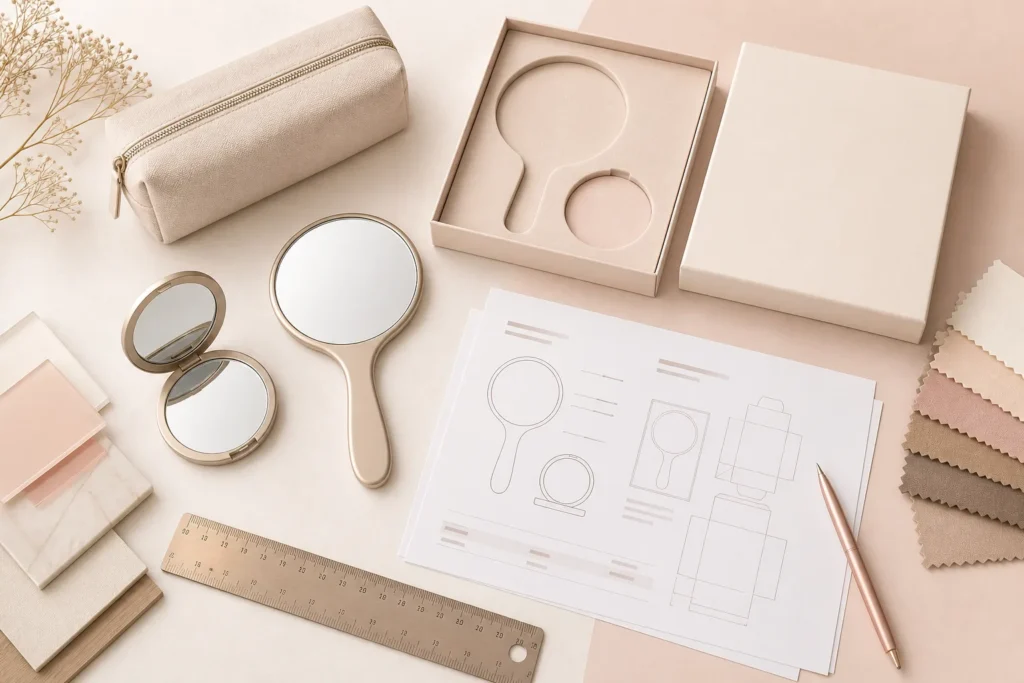
A mirror gift set quotation becomes reliable only when the supplier can identify exactly what is counted, customized, packed and shipped. A short request such as “one mirror, one pouch and a box” leaves too many commercial variables open: the quantity may refer to individual pieces or complete sets, the pouch may need a separate sourcing route, and the outer carton may not yet have been calculated from the final pack.
Use this checklist to prepare a buyer-ready RFQ before asking for price, sample timing or delivery. If you are still deciding which mirror-led set format to develop, first review the custom mirror gift set development page.
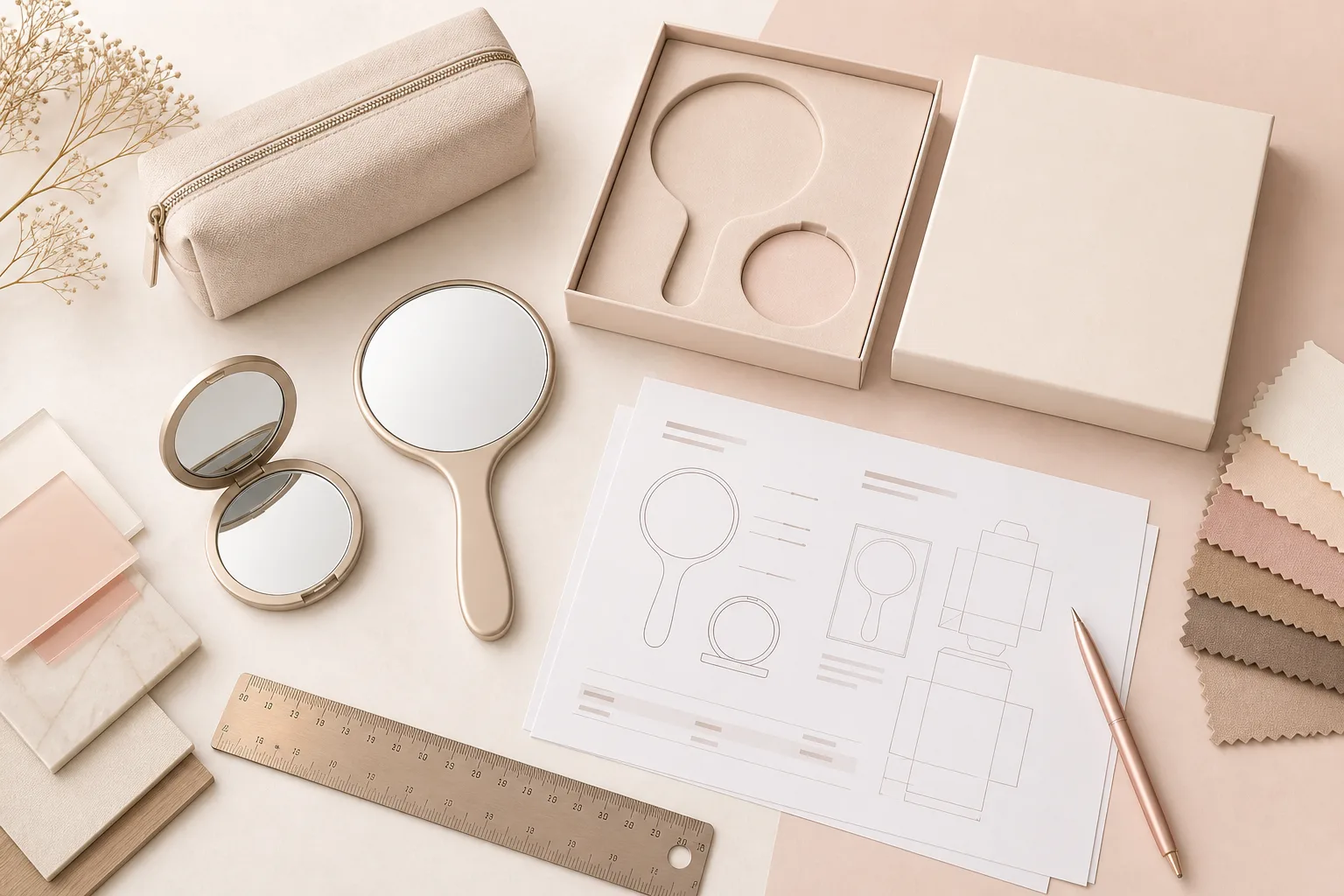
1. State Whether the Quantity Means Sets or Individual Units
Begin with one unambiguous line: “5,000 complete sets, each containing one mirror and one pouch,” or “5,000 mirrors plus 5,000 pouches.” This distinction affects component purchasing, assembly labor, packaging count, inspection records and carton calculations.
- Total number of complete sets
- Quantity of every component inside each set
- Required overage or spare components, if any
- Whether samples are counted separately from production
- Whether one retail unit contains one set or several sets
Do not use “pcs” alone when the program contains multiple items. Write both the set count and the item count.
2. List Every Component and Its Supply Responsibility
A mirror-led gift set may combine a compact or handheld mirror with a pouch, comb, brush, hair clip, scrunchie or other beauty accessory. Identify each component separately and state whether it is mandatory, optional or still under review.
Also ask the supplier to confirm the supply route. Some items may be made through the mirror program, while others may be coordinated with a specialist partner. That difference can affect color matching, minimum quantities, development timing and quality responsibility. The quotation should not silently assume that every accessory follows the same tooling or production route as the mirror.
3. Define the Mirror Before Defining the Set
The mirror is the functional product and should be approved first. Include:
- Compact, handheld, LED or tabletop route
- Shape and target dimensions
- Single-sided or double-sided structure
- Mirror material and magnification by side
- Frame, shell, cover and hinge materials
- Existing tooling or new tooling requirement
- Color, surface finish and tactile direction
- Logo method, position, size and artwork
Reference images can explain a visual direction, but they do not replace measurable specifications. If the proposed design combines features from several references, identify which feature comes from each image.
4. Specify Each Accessory Separately
For every accessory, record its material, dimensions, color, decoration, hardware and functional requirements. For a pouch, that may include fabric or PU route, lining, zipper, puller, internal pocket and logo. For a comb or hair clip, include material, shape, size, color effect and decoration area.
If the accessory is only a styling idea and not yet approved, say so. This prevents a visual mockup from being mistaken for a confirmed production specification.
5. Approve Color on the Actual Materials
A Pantone reference is useful, but the visible result changes with substrate, texture, gloss, metal plating, printing process and lighting. Ask how each visible component will be approved: digital artwork, printed strike-off, coated part, plated sample, fabric cutting or physical material swatch.
For PU in particular, a video or screen image may not represent the selected red, cream or other color accurately. The PU color approval guide explains when a physical swatch should become the controlling reference.
6. Separate Artwork by Component and Process
Send vector artwork and identify the decoration method requested for each location. A set may use silk-screen printing on the mirror, embossing on a pouch and full-color printing on a paper box. These are separate approvals, even when the same logo appears on all three.
- Artwork file and version
- Print or decoration method
- Logo dimensions and position
- Color reference
- Readable orientation when the product is held or displayed
- Whether the decoration must withstand rubbing or repeated handling
7. Define the Complete Packaging Structure
State whether the set uses a drawstring pouch, polybag, blister, paper insert, molded tray, color box, rigid gift box or another structure. Then describe how every component is held in place. A beautiful box is not approved if the mirror or accessory can move, rub or strike another component during transport.
Include required instructions, barcodes, warning labels, retail labels and shipping marks. If the final set dimensions are not yet known, ask the supplier to confirm carton data only after the approved sample and packaging are complete.
8. Request Carton Data in a Comparable Format
For freight comparison and warehouse planning, request:
- Complete sets per export carton
- Outer-carton dimensions
- Gross and net weight
- Total carton count
- Carton marks and barcode requirements
- Whether the data is estimated or measured from the approved pack
Carton data should follow the final packaging arrangement. An early estimate can support budgeting, but it should not be represented as final shipping data.
9. Add Destination, Trade Term and Document Requests
The RFQ should identify the destination country, required delivery location, preferred shipping method and requested trade term. If a certificate of origin, product test report, battery transport document or market-specific label is required, name it at the quotation stage. Availability and coverage must be checked against the actual product, component and route; they should never be assumed from a different model.
10. Define the Approval Record Before Bulk Production
The final sample record should connect all approved parts: mirror configuration, accessory specifications, material swatches, logo artwork, box construction, component count and carton plan. Record dated photographs and the exact reference used for color and finish. Define the project-specific inspection points rather than relying on a universal inspection statement.
A Compact RFQ Format Buyers Can Copy
- Market and use: country, channel and program type
- Quantity: complete sets and units per component
- Mirror: type, shape, size, material, mirror configuration and tooling route
- Accessories: item-by-item material, size, color and decoration
- Branding: artwork, method, location and color reference
- Packaging: pouch, insert, box, labels and component fixation
- Delivery: destination, target date, trade term and shipping method
- Documents: only the specific documents your market or logistics team requires
For a documented example of how specifications, color approval and packing were handled in a completed program, see the Australian beauty brand GWP mirror and pouch case study.