
Polybag, blister and paper-box packaging solve different buyer tasks. The right choice depends on whether the unit needs basic separation, visible retail display or a branded unboxing surface.
All three routes are available for JoJoMirror handheld mirror projects. Final dimensions, materials, carton arrangement, MOQ and timing are confirmed after the product and packaging specification is reviewed.
For the complete handheld mirror offer, see our custom handheld mirror manufacturer page.
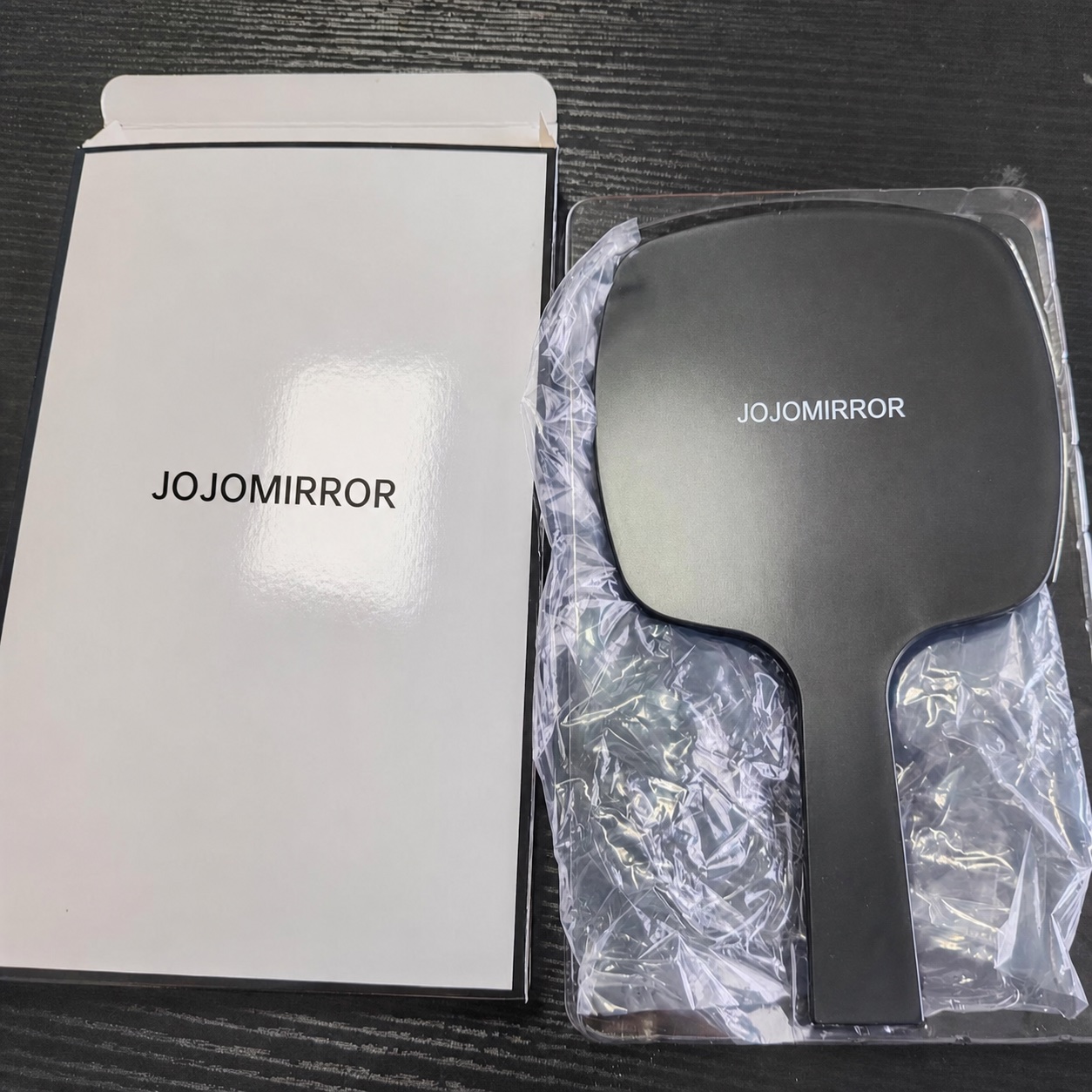
Compare Polybag, Blister and Paper Box
Polybag: Basic Unit Separation
A polybag is the most direct of the three confirmed routes. It can separate the mirror surface and frame from nearby units and keep the product together before secondary packing.
Buyers should approve the bag dimensions, closure, warning or recycling marks where required, and whether the product needs additional support. A polybag alone should not be described as proof that a fragile mirror is protected for every shipping route.
Blister: Product Positioning and Visibility
A blister can hold the mirror in a defined position and make the product visible. It may suit programs where the buyer wants the shape, color or handle design to be seen before purchase.
Approve how the product is retained, whether the mirror surface is adequately separated from contact points, how the blister opens, and how printed information is presented. The tooling and pack design must match the final product dimensions.
Paper Box: Branded Presentation Surface
A paper box provides more space for brand artwork, product information and a controlled presentation. It can also contain an inner bag or blister when that combination is part of the approved pack.
Buyers should define the box dimensions, board and print requirements, insert or inner support, opening style, barcode position and shipping-carton arrangement. None of these details should be assumed from the words “paper box” alone.
Buyer Decision Table
| Packaging route | Primary buyer task | What to approve |
|---|---|---|
| Polybag | Basic separation and unit containment. | Fit, closure, required markings and any additional protection. |
| Blister | Hold and display the product in a defined position. | Retention, contact points, opening method, dimensions and printed backing. |
| Paper box | Create a branded retail or presentation surface. | Board, print, insert, opening, barcode and carton arrangement. |
Approve Packaging With the Product Sample
- Freeze the final handheld mirror dimensions and structure.
- Place the product in the proposed unit pack and check fit.
- Inspect contact points around the mirror, frame and handle.
- Confirm artwork, orientation, barcode and required legal markings.
- Define the master-carton arrangement and any project-specific transport test.
- Record the approved combination in the sample approval file.
The custom handheld mirror sample approval checklist covers the product-side inspection points that should be reviewed at the same time.
What to Include in a Packaging RFQ
Send the product dimensions, target quantity, sales channel, preferred pack type, artwork files, barcode or label requirements, inner support preference, master-carton requirements and destination market. The packaging route can then be reviewed with the actual handheld mirror specification.
Request a custom handheld mirror quote.
About the Author

Queena Hu
JoJoMirror
WhatsApp: +86 180 7107 3890 | Mobile: +86 180 7107 3890